
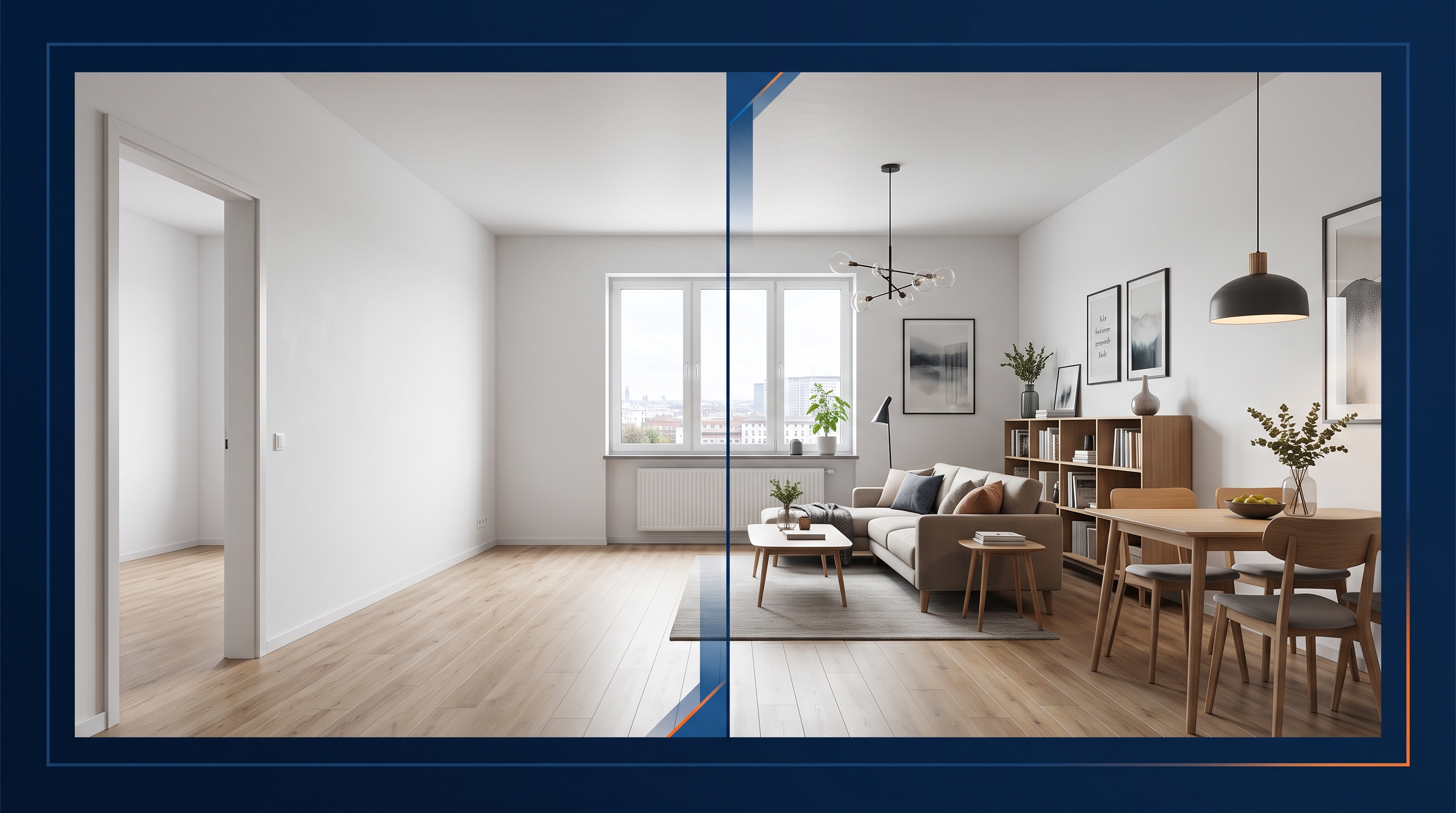
Photograph a vacant property as usual, then furnish the rooms virtually before publishing the brochure. Vividomo® AI Image Studio creates furnished versions from the original photographs without furniture rental or a staging team. Buyers can imagine living in the rooms rather than seeing an empty flat.
The problem: empty rooms are harder to sell
Every estate agent knows the situation: the previous owner has moved out, heirs want a quick sale, or a new build is vacant. Empty rooms can look different in photographs. A 22-square-metre living room may appear enormous or impersonal without furniture to provide scale.
Buyers struggle to imagine the furnishings. Many scroll past an empty room because the photograph tells no story, costing enquiries even when the property would suit them. Physical staging takes time, money and coordination and is often not worthwhile for smaller properties.
The Vividomo® workflow: from original photograph to furnished room
Photograph the empty property with good lighting and a straight angle. Upload the images to Vividomo®, where you already need them for the brochure. In AI Image Studio, select the rooms and a furnishing style.
The AI creates a version with furniture, rugs and decorations suited to the room's dimensions and layout. The result appears in the same tool you use for the brochure, without an external provider or exchanging files by email.
In practice, clearly identify virtual furnishings in the brochure. This is normal industry practice and builds trust by preventing surprises at viewings.
Agency example: a vacant inherited flat
An agent takes on an inherited three-room flat. It has stood empty for months and the last furniture has been removed. The rooms are bright and the layout functional, but the photographs look bare and uninviting.
Instead of organising a staging team with several days' lead time and extra costs, she uploads the images and virtually furnishes the living room, bedroom and dining room. Soon she has two brochure versions: original photographs for buyers wanting to see the actual condition, and furnished views as the main presentation.
The difference shows in conversations. Instead of asking how big the living room would feel with furniture, buyers ask specific questions about the layout, location and price. They can already imagine the rooms before visiting.
A second example: an unfurnished new build
An agent is marketing a newly built apartment with the interior finished. With only six units, the developer decides a show flat is uneconomical. Photographs show bright but empty rooms, tiled floors and white walls: accurate, but difficult to picture for buyers unfamiliar with unfurnished new builds.
The agent creates virtual furnishing options for the two hardest rooms to imagine: the open-plan living/dining room and a child's bedroom with a sloping ceiling. The latter highlights a benefit: the empty photograph makes the slope look restrictive, but adding a bed and shelving demonstrates usable space.
The brochure places the furnished images beside the floor plan and clearly labels them as virtual. At viewings, several buyers say the images helped them picture the furniture before arriving. Conversations move directly to specific furnishing ideas and connections instead of starting from scratch.
What virtual staging does not replace
Virtual staging is a visual tool for brochures, not a statement about actual property condition. Buyers will see an empty flat at the viewing, so clear labelling belongs in the brochure. It helps protect you legally and keeps expectations realistic.
It does not replace professional advice on preparing a property. Furniture imagery cannot permanently conceal structural defects or a poor layout. Its purpose is to show potential, not hide weaknesses.
How it works alongside purchase price estimates
Alongside Image Studio, Vividomo® offers an AI-assisted purchase price estimate based on property data. This supports your market knowledge and does not replace an on-site professional assessment or formal valuation. Vacant properties can differ from occupied comparables, so your judgement of location, condition and fittings remains essential.
Realistic images and an initial estimate help you begin advising the seller sooner. Setting the final price remains your professional responsibility.
Common virtual staging mistakes
One common mistake is choosing a style unsuited to the target audience. Bulky country-house furniture looks implausible in a small city flat; a clean, neutral style generally works better and appeals to more buyers.
Another is omitting the “virtually furnished” label. Even unintentionally, that can make buyers feel they received misleading information. Transparency costs nothing and avoids arguments at viewings.
A third mistake is furnishing many rooms without first reviewing the photographs. A blurry or poorly lit original still produces weak results. A clear, well-lit source image remains essential.
A fourth concerns image order: showing only furnished versions without originals can seem opaque. Offer both, or clearly state that this is an unfurnished flat shown with virtual furnishings.
When virtual staging is particularly worthwhile
Not every property needs it. Furnished homes or properties with well-maintained, neutral physical staging usually need no extra work. It is particularly useful for long-vacant listings, new builds without a show flat and unusual layouts that are hard to interpret in empty photographs, including sloping ceilings, open plans and very small rooms where fitting furniture is a key question.
Frequently asked questions
Can I choose different furnishing styles? Yes. Vividomo® AI Image Studio offers different styles to suit the property and target audience.
Do I need to label virtual images in the brochure? Doing so is customary and recommended to avoid misleading prospects. If unsure, check the exact requirements with your regional authority or professional body.
Does virtual staging work for commercial properties? The current focus is on residential rooms, where furnishings are particularly important to the purchase decision.
Does virtual staging completely replace physical staging? Not always. For expensive properties with long marketing periods, physical staging can still be worthwhile. Virtual staging is especially useful when brochure images are needed quickly without arranging furniture.
What this means for an estate agent's day
Virtual staging solves a specific problem: empty rooms that look unappealing despite the property's strengths. With Vividomo® AI Image Studio, you edit your own photographs in the same tool used for the brochure, without another provider or additional waiting. Price estimates support the process without replacing your professional on-site judgement.
To see Image Studio with your own properties, book a demo or try Vividomo® free at vividomo.ai.